 English
 Suomi
Suomi
 Latviešu
 Русский
 Lietùvių
 Eesti
Eesti
 Polski
Skoda has clearly made significant progress since the days before Volkswagen. It is now the third best-selling car manufacturer in Europe, with a 6.3 percent market share through October. It’s fair to say the company is in the best condition of its 100-year history, not including the years under the earlier Laurin & Klement brand. However, Skoda is still paying attention to the cars produced in communist Czechoslovakia before VW assumed control in the early 1990s. Through its “Icons Get a Makeover” series, Skoda has been reimagining past models as futuristic EVs. The latest episode focuses on the company’s first vehicle to reach one million sales. The rear-wheel-drive, rear-engined 100/110 returns as an imagined successor to the sedan sold between 1969 and 1977. As with the other fictional cars in the series, the electric sedan follows the brand’s Modern Solid design language. Specializing in headlight design, Skoda exterior designer Martin Paclt avoided relying too much on retro elements, choosing instead to let his creativity flow. For instance, the car doesn’t have a rear window. Instead, a body-colored curved panel features a central fin that also functions as an air intake and contains the third brake light. Despite the major redesign, there are still subtle references to the classic 100. Even without a rear engine, the designer included discreet rear-fender vents. After all, EVs still need cooling. The LED light bars at the front and rear echo the original’s chrome strip and engine vent, respectively. There’s still a fuel cap on the front fender, but it now hides the charging port. At 163.6 inches (4155 millimeters) long, the original Skoda 100 was a relatively small car. Its hypothetical successor, however, started from the current-generation Superb’s foundation and grew into an even larger vehicle. The designer felt a short overhang was appropriate for a dedicated EV platform. This architecture also allowed for a dual-trunk design, with the rear cargo area positioned above the drivetrain. As with previous digital concepts, these reinterpretations of historic vehicles are created by Skoda designers purely for fun, after office hours. Unfortunately, they do not indicate future production models. The 100 wouldn’t fit into today’s lineup anyway, since both the Octavia and Superb are set to become electric. In fact, the next-generation Octavia has already been previewed in electric form by the Vision O, an electric wagon concept that Paclt helped with prior to the production model’s launch in the coming years. At the pace its releasing renderings, Skoda will eventually run out of old cars to bring back. The fictional series that updates classic nameplates is a fun experiment that more established automakers, including its parent company VW, should take on.

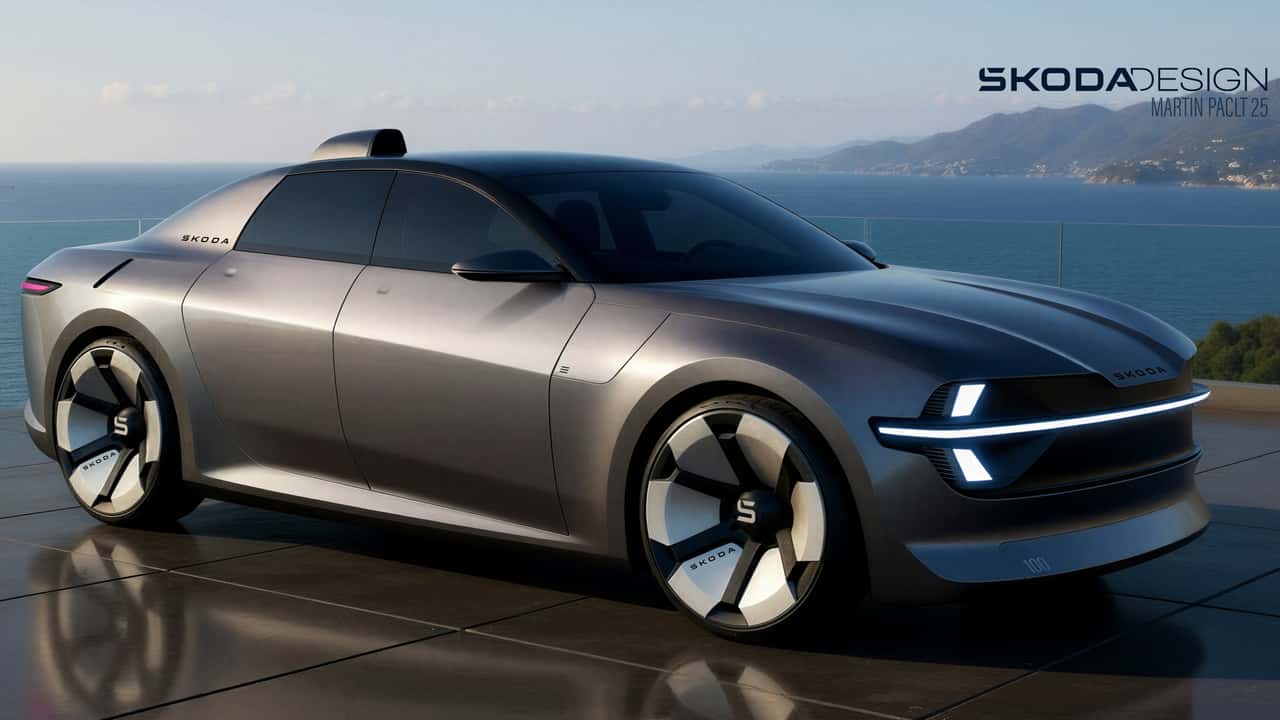
Skodas Imaginary New Sedan Looks So Good Youll Wish It Existed
Created Date: 29 Nov 2025