 English
 Suomi
Suomi
 Latviešu
 Русский
 Lietùvių
 Eesti
Eesti
 Polski
There’s something about a competition-ready Land Rover with a striking livery that makes me smile from ear to ear. It reminds me of seeing a Camel Trophy-covered Discovery or Defender crossing a river, climbing a dune, or being pulled through a ridiculous amount of mud. Now we have a new potential icon of off-road adventure. Meet the stylish little troublemaker: the Defender Dakar D7X-R. Land Rover aims to make a big impact on the World Rally-Raid Championship schedule in 2026. Three Defenders will compete for the first time at the years opening event, and it’s a major one—the Dakar Rally. One thing is certain, just by taking a quick look at the truck. The Defender team adds serious style to this desert adventure. Land Rover describes the paint scheme as a Geopalette design. Sand, stone, and earth tones stand out against the aqua roof. Its a striking look, and it fits the Defender really well. Mechanicals are more important than appearance, of course. Land Rover’s Defender Rally team started with the new Defender Octa. Since the truck will compete in the Stock category, the twin-turbocharged 4.4-liter V8 remains in the front. However, due to power-to-weight regulations, the engine will be limited with an air-intake restrictor. Still, the Dakar D7X-R should have plenty of power available. Land Rover uses the same eight-speed gearbox as the standard Octa, but switches to a lower final-drive ratio. This is an easy way to maximize your low-speed torque. The powertrain also benefits from extra cooling, better airflow, and a tougher particle filter to keep out sand and dust. The Defender Rally team installs a more aggressive brake system. While the suspension keeps some parts from the version used on the Octa, Land Rover replaces the front shocks with single coil-over dampers and uses twin dampers in the rear. Bilstein provides the damping components and worked on the system together with Defender Rally. That suspension system has to support the extra weight of the D7X-R. Since it needs to tackle long stages, the truck comes with a 145-gallon fuel tank. Inside, there are 2 gallons of water, three spare wheels, a robust FIA-spec roll cage, tools, compressed air, and more spare parts. Check out that onboard computer system, though, because it’s an impressive piece of racing technology. In fact, Defender Rally created something called ‘Flight Mode.’ When the Dakar D7X-R is in the air, the system modifies how torque is sent to the wheels to safeguard the drivetrain when it lands. The three-truck effort of the Defender Rally team is heading to Saudi Arabia to start the 2026 W2RC season. Racing kicks off with the Dakar in January. After that, the series moves to Portugal, Argentina, Morocco, and finally the United Arab Emirates. But it’s the Dakar race that is likely to be the most challenging…and potentially the most rewarding, too. “The Defender is heading into the unknown – tackling the dunes, enduring the heat, and racing flat-out against the clock,” says Ian James, Team Principal of Defender Rally. “We know the Dakar is one of the toughest challenges in motorsport – but that’s exactly why we are participating. After an intense testing program, the team is ready for the adventure ahead, and the Defender Dakar D7X-R has been built to handle it.” The Defender Dakar D7X-R has some big, sandglow-yellow shoes to fill. Let’s hope it really puts ‘Flight Mode’ to the test.

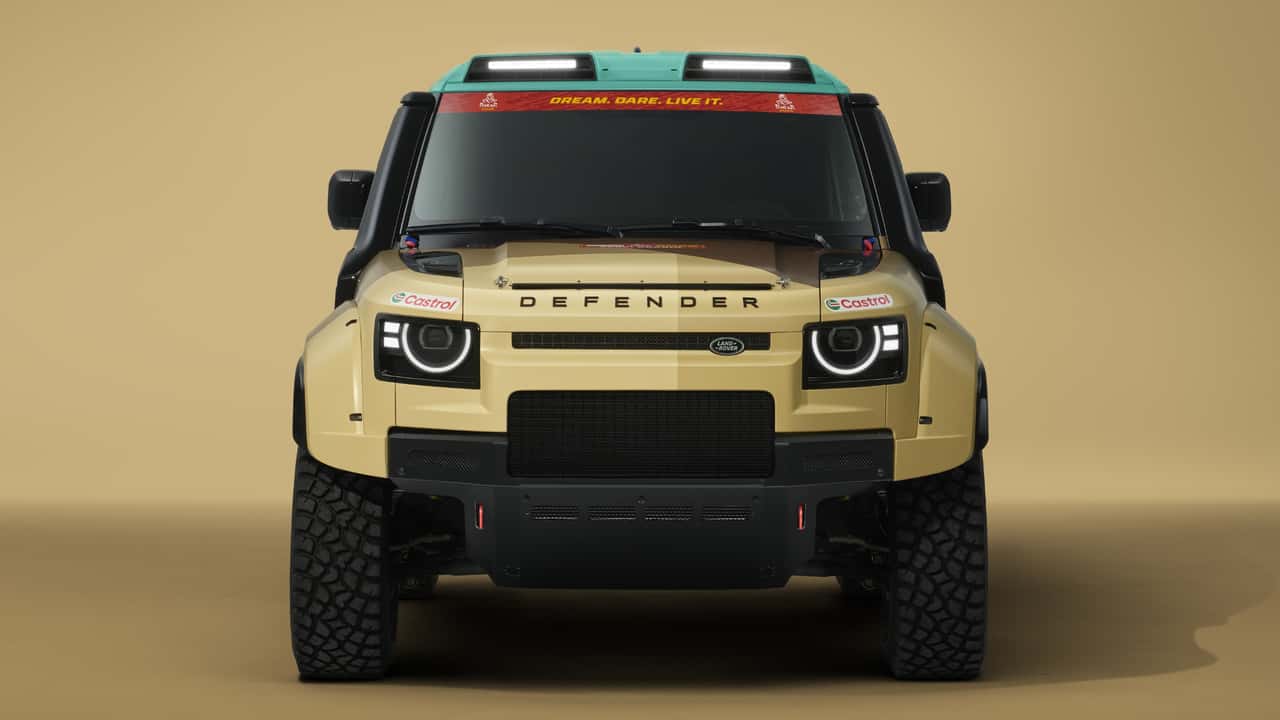
Land Rovers New Defender Racer Is Ready for Dakar
Created Date: 29 Nov 2025