 English
 Suomi
Suomi
 Latviešu
 Русский
 Lietùvių
 Eesti
Eesti
 Polski
We were surprised when Ferrari revealed the F80 a little over a year ago, only to find out it had a small V-6. Its launch came just a few months after Ferrari reinforced its long-term commitment to the powerful V-12 by retaining all twelve cylinders in the 812 Superfast’s successor. In fact, even the car’s name paid tribute to the esteemed engine.:12 Cylinders. Having only half the cylinder count for the F80 flagship might not sit well with those who believe theres no substitute for displacement. But Ferrari is firm that it made the right decision, even though both the 12Cilindri and the Purosangue SUV still use the 6.5-liter V-12. During a technical workshop on November 19 at the Museo Enzo Ferrari in Modena, the supercar maker explained what went into developing LaFerrari’s replacement. Ferrari did consider keeping a naturally aspirated V-12, but in the end, switching to a turbocharged V-6 with forced induction turned out to be an easy choice. Here’s what Matteo Turconi, Senior Product Marketing Manager, had to say: Turconi even goes as far as to claim that the V-6 is superior to a V-12, and says he has the numbers to back up such a bold statement. The 3.0-liter engine, derived from the 499P endurance race car, produces an impressive 300 horsepower per liter. But it’s not just the record-breaking output—its compact size also allows for a shorter wheelbase and lower weight. The V-6 is fondly called “the big engine” in Maranello, according to Paolo Valenti, Team Leader of the Pilot Product Line. Eliminating the bulky V-12 also provides aerodynamic advantages; the V-6’s smaller size allows the diffuser to be extended to 1.8 meters (70.8 inches). While the absence of a V-12 might disappoint fans of big engines, it’s worth remembering that the 288 GTO and F40 used V-8s. People don’t complain about those, right? And the F80’s appeal is undeniable.:Every one of the 799 units is already taken. Although an electric Ferrari is coming soon, the company recently emphasized that it will keep investing in combustion engines— not just the V-6, but also the larger V-8 and even the V-12. By the end of the decade, pure ICE models are expected to make up 40 percent of the lineup, with hybrids accounting for another 40 percent. The remaining 20 percent will be electric vehicles.

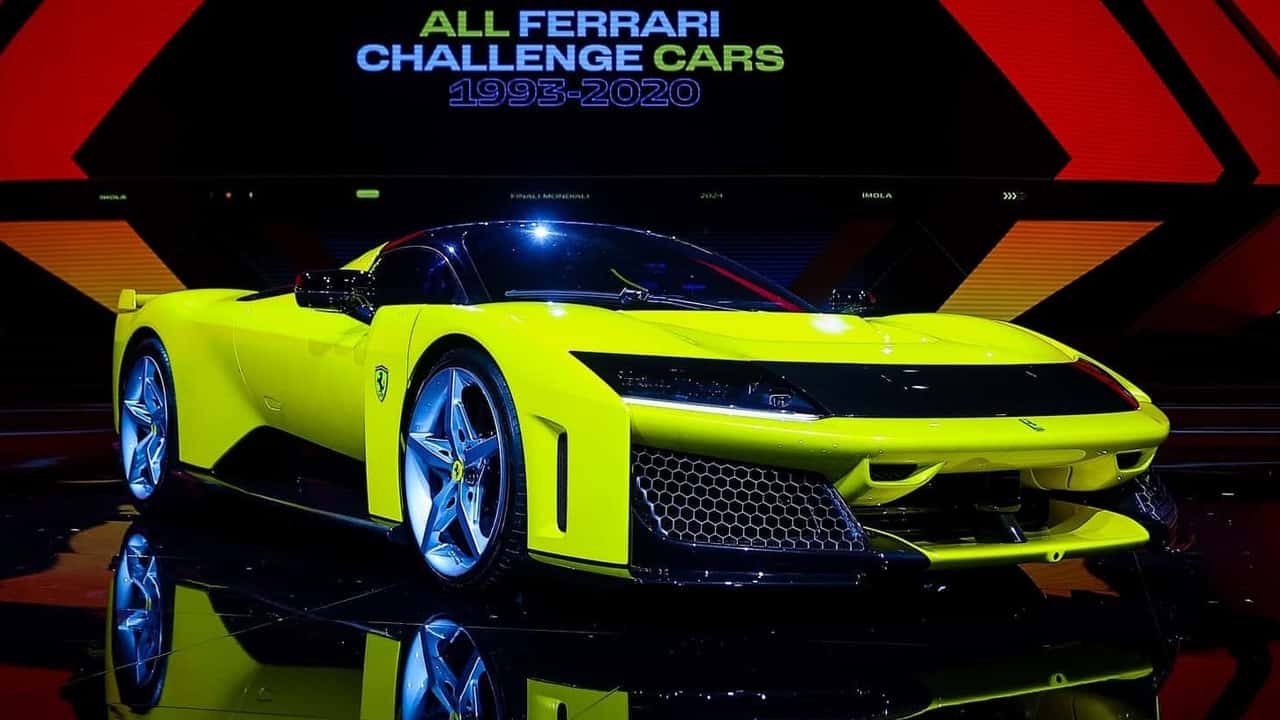
Ferrari:The F80s V6 is better than the V12
Created Date: 29 Nov 2025